
Cleanouts
An Estate Cleanout Checklist for Gainesville, Georgia
An estate cleanout is the slowest job we run, and it should be. Here is the order that works in a Hall County house: paperwork, family, appraiser, donation, container.
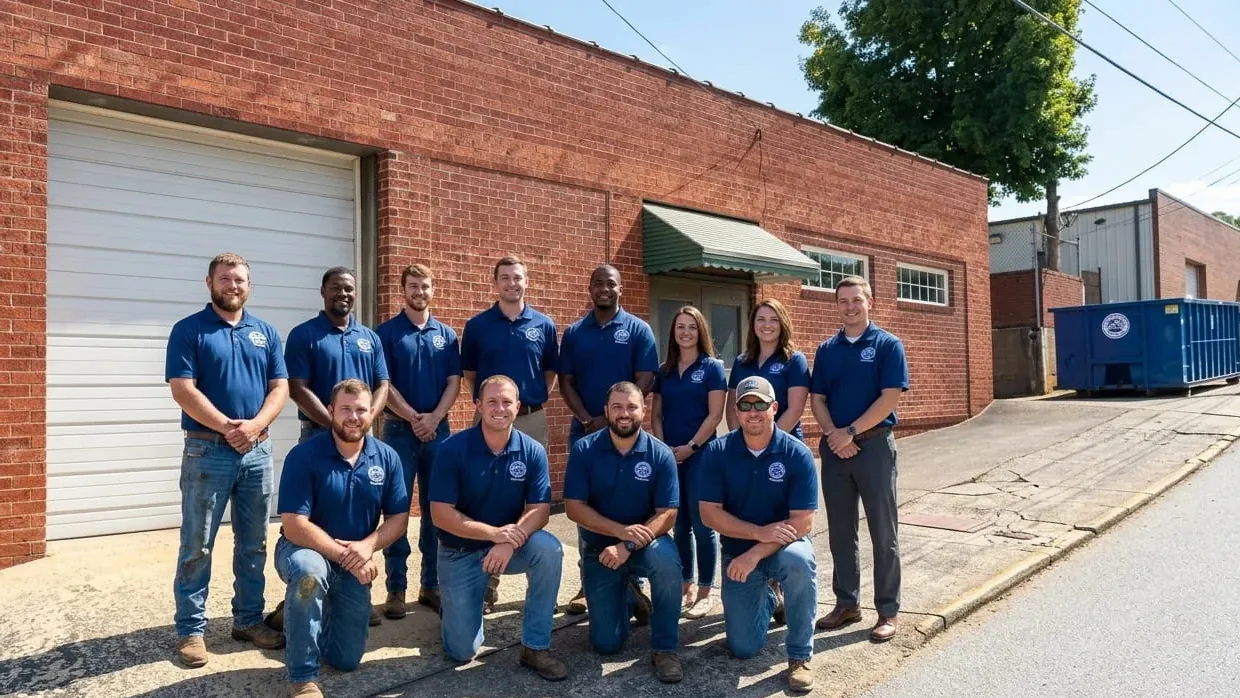
An estate cleanout is the slowest job we run, and it should be. Somebody lived in that house for forty years. The container will be there for two weeks, not two days, and the pace is set by the family, not by the truck.
What follows is the checklist we give people when they call, in the order it actually works. It is written for a Hall County house, which usually means an older one, on a lot with a grade, with a basement and an attic full of things nobody has looked at since the Reagan administration.
Start with the paperwork, not the furniture
The single most common regret in an estate cleanout is a document that went out in a box of magazines. Before anything moves, walk the house with a bin and pull anything that could be a record.
- Deeds, titles, surveys, plats and mortgage papers
- Insurance policies, annuity and pension paperwork, bank and brokerage statements
- Tax returns and receipts, which have their own retention rules
- Military discharge papers, birth, marriage and death certificates
- Vehicle titles and registrations, including for a boat or a trailer
- Safe deposit box keys and any note about where the box is
- Photographs, letters, family bibles, ledgers and address books
Documents hide in three places in an older house: a filing cabinet or desk, the bottom of a dresser drawer, and inside books. Check inside books. People of a certain generation used them as safes, and cash, bonds and deeds turn up between pages more often than you would think.
Do not shred until the estate is settled
Set the paperwork aside in a box and leave it in one piece until whoever is handling the estate has had a look. That is an executor question, not a hauling question, and we are not the people to answer it. The container is for the magazines, the catalogs and the forty years of newspaper, once somebody has gone through the drawers.
The four-pile method, room by room
Every workable estate cleanout uses some version of four destinations. Name them out loud before you start so nobody has to re-litigate each object.
- Keep. Family takes it. Tagged, boxed and moved out of the house first, so it stops getting handled.
- Sell. An estate sale company, an auction house or a consignment dealer. Get that appraisal before the container arrives, not after.
- Donate. Furniture, housewares, clothing, tools. Many organizations will pick up, and some will not take upholstered goods.
- Haul. Everything else. This is the container.
Do those in that order and the container gets smaller. Do them out of order and you will pay to haul something a dealer would have paid you for.
Donation is the pile people underestimate. Furniture, kitchenware, hand tools, linens and clothing move quickly, and several organizations in this area will send a truck if you give them enough notice. Notice is the operative word. A pickup booked two weeks out is easy. A pickup booked the day before the container is pulled does not exist. Book donation while you are still sorting, and be honest with yourself about upholstered furniture, because many groups will not take a sofa that has been in a damp basement.
The room-by-room list for a Hall County house
The basement and the attic are not the last two lines on this list by accident. In this county they are the majority of the volume, because deep, well drained ground on rolling terrain means houses here get built with something underneath them. The accumulation goes down, not out.
| Space | What it usually holds | The thing people forget |
|---|---|---|
| Kitchen | Small appliances, cookware, decades of dishes | Expired medication in the cabinets |
| Bedrooms | Clothing, mattresses, dressers, linens | Documents and cash in dresser bottoms |
| Bathrooms | Toiletries, towels, cabinets | Prescriptions and old chemicals |
| Living areas | Furniture, books, electronics, carpet | Papers tucked inside books |
| Attic | Boxes, holiday goods, luggage, insulation | Heat, footing and how the hatch is framed |
| Basement | Tools, freezers, workbench, stored everything | Damp-ruined boxes and stored chemicals |
| Crawlspace | Fallen insulation, vapor barrier, scrap lumber | Every piece must fit through the hatch |
| Garage and outbuildings | Yard equipment, fuel cans, paint, tires | Almost none of it rides in the container |
The basement is where the schedule is decided
A basement is a stair carry unless the house has a daylight walkout, and Hall County has a lot of walkouts. If yours does, tell us. The container goes near that door and the job gets a day shorter. If it does not, plan on more trips, a shorter carry distance, and probably a 20 yard rather than a 30, because two people can throw material over the side of a 20 without a ramp. Our sizing notes are on the dumpster sizes page.
The attic is a footing problem
Attics in older houses here are floored with whatever was handy in the year the house went up, which sometimes means a few boards laid across the joists and nothing else. Add heat, poor light and a pull-down stair rated for a person and not a person carrying a trunk, and you have the one part of an estate cleanout where somebody actually gets hurt. Work it in the morning before the heat builds, run a light down, and hand material to a second person at the stair rather than carrying it down alone. Anything heavier than a box of books wants two people.
What cannot go in the container
An estate house has forty years of chemistry in the garage and under the sink. None of it is container material, and the restriction is not ours. The Hall County landfill refuses chemical waste, liquid waste, hazardous waste and pressurized tanks outright, and the county's compactor sites prohibit the same categories along with tires and yard trimmings.
- Paint, stain, solvent, thinner, pesticide, pool chemicals. The county landfill handles paint for a fee, as published. Call 770-531-6851 before you load a car.
- Fuel, motor oil, antifreeze and any liquid. Never in a container.
- Propane cylinders and any pressurized tank, including the old grill bottle behind the shed.
- Tires and wheels. Georgia regulates scrap tires separately under O.C.G.A. Section 12-8-40.1.
- Refrigerators, freezers and window units until the refrigerant has been properly recovered.
- Medications. Do not put them in a container and do not flush them. Use a take-back program.
- Firearms and ammunition. Set them aside for law enforcement or a licensed dealer. They never go in a box of household goods.
- Brush, limbs and yard debris. Georgia bans yard trimmings from lined municipal landfills under O.C.G.A. Section 12-8-40.2, effective 1 September 1996, with the definition at Section 12-8-22(42). That has to be a separate clean load.
- Asbestos-containing material. Georgia EPD runs that program under Ga. Comp. R. & Regs. Chapter 391-3-14, with ten working days of notice and a required survey for regulated material. The EPD duty officer is 404-363-7026.
If the cleanout turns into a renovation
It usually does. The family decides to sell, and suddenly the carpet is coming up and the kitchen is coming out. Two things change at that point.
First, the debris changes class. Building materials, roofing debris, lumber, siding, carpet, tubs, toilets and crossties are named in City of Gainesville Code Sec. 4-3-9 as things the city will not collect. The City wrote our job description into its own ordinance.
Second, if the house was built before 1978 and the work disturbs paint, Georgia's lead Renovation, Repair and Painting rule applies. Georgia is an EPA-authorized state for RRP. It was the twelfth, effective 5 July 2011, and the program lives at Ga. Comp. R. & Regs. Chapter 391-3-24. Contractors certify with Georgia EPD, not with EPA, and Georgia's rules are stricter than the federal baseline. Carrying boxes out of a 1958 house is not RRP work. Scraping and sanding its painted trim is.
Sizing and swap timing
Estate work runs long and it runs in bursts. A family gets a weekend, then nobody can come back for ten days. That argues for a container that stays, and for planning the swap before you need it.
Most full estate cleanouts in Hall County land on a 30 yard, or a 20 with one swap. The 30 is the right call when the basement and attic are both full and the furniture is staying with the house. The 20 with a swap is often better when the carry is long, the driveway is tight, or the family wants two working weekends separated by a pause. Older streets near Green Street, downtown and the mill village housing at Chicopee and New Holland can be narrow enough that the 15 is the largest box that will physically fit, which settles the question for you.
One practical rule about weight
Books, paper, plaster, tile and wet basement cardboard are heavy for their bulk. A container full of a lifetime of books will hit its weight limit with room left at the top. If a basement is mostly paper and masonry, split it: heavy material in a smaller box, bulky furniture in the larger one. That is cheaper than one overweight load, and the reasoning is laid out in more detail in our home cleanout checklist.
Ten steps, in order
- Walk the house with the executor. Photograph rooms before anything moves.
- Pull every document, photograph and record into one boxed pile.
- Let family take what they are taking, and get it out of the house.
- Bring in an appraiser, estate sale company or auctioneer if there is anything of value.
- Schedule donation pickups.
- Separate chemicals, cylinders, tires, medications and firearms into their own staging area, away from the container.
- Separate brush and yard debris. Different load, different destination.
- Order the container and tell us the driveway surface, the grade and whether there is a walkout.
- Work top down, or basement first if the carry is the constraint. Load heavy and flat on the bottom.
- Book the swap or the pull a few days ahead, not on the last afternoon.
What we can do to make it easier
We can leave a container longer than a construction customer would need it. We can swap on a schedule that matches when family is actually in town. We can talk through what belongs in which load before delivery, which saves the awkward conversation at the curb. What we cannot do is decide what matters to your family, and that is the part that takes the time.
One more thing, said plainly. We are a hauling company. We are not appraisers, we are not attorneys and we do not advise on estates. When we are asked whether something is worth keeping, the honest answer is to ask somebody whose job that is before it goes over the side of a container. Nothing in a box is easy to get back once the truck leaves the driveway.
If you are working through one now, call the office at (470) 691-8287 and describe the house: how many levels, whether there is a basement, how the driveway sits. That is enough for us to tell you what to order. There is more about how we handle these on our estate cleanout page. Take the two weeks. It is a house, and it will wait.
Questions this guide did not answer? Call (470) 691-8287. We would rather spend two minutes on the phone than have you order the wrong container.