
The whole house
30 Yard Dumpster Rental in Gainesville, GA
The container for a large remodel or a full estate cleanout — a house going out completely, basement and attic included. Tall sides, real capacity, and the size families reach for when a long tenure is being cleared over several weekends rather than one afternoon.
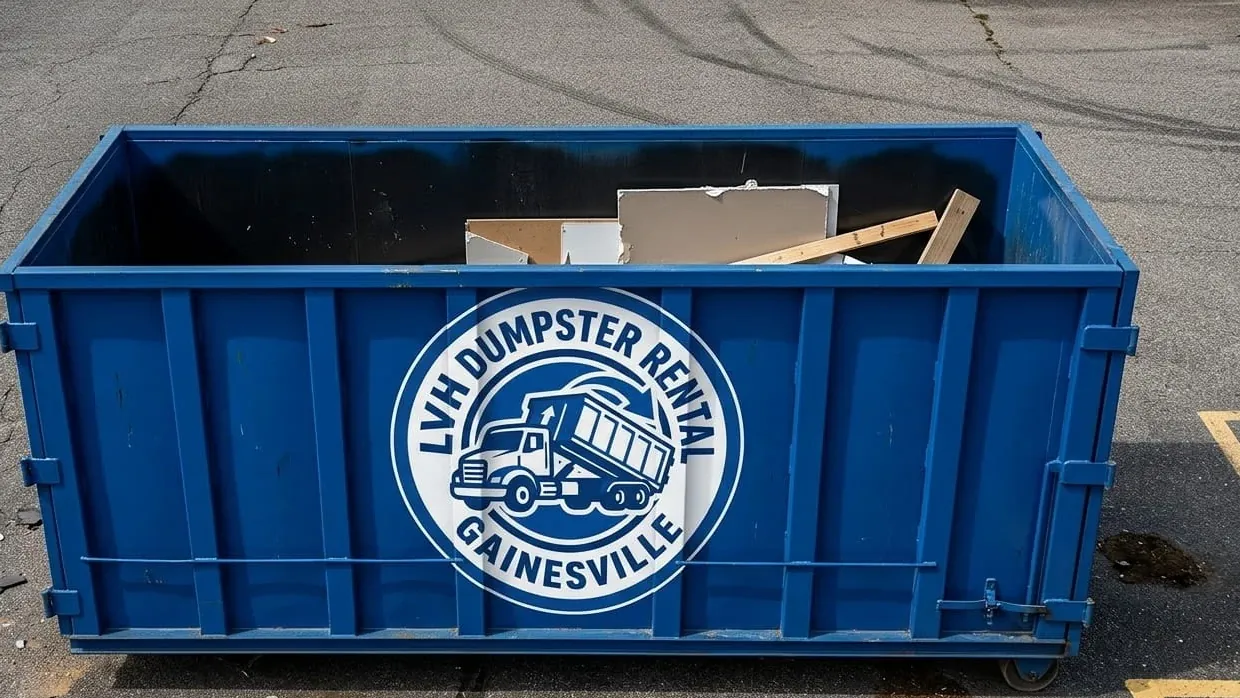
A 30 yard roll-off is about twenty-two feet long, eight feet wide and roughly six feet tall — the same footprint as a 20 with taller sides, which is why it fits more driveways than people assume. It is the container for a whole house: a full estate cleanout, a large multi-room remodel, or a property being emptied ahead of a sale. Everything that goes in it should be bulky rather than dense.
- Capacity30 cubic yards
- Footprint22 ft x 8 ft x 6 ft
- Weight allowance4 – 5 tons
- Holds about~9 – 12 pickup truck loads
Why people choose the 30 yard
The 30 is the estate cleanout container, and in Hall County an estate cleanout is bigger than the same job would be almost anywhere in the south, because the house has more in it. Basements and crawlspaces are normal here — deep Cecil soils, more than sixty inches to bedrock, sloping upland, a city at about 1,214 feet — so a three-bedroom house is really three bedrooms plus a full basement plus an attic plus whatever is in the crawl. Families size for what they can see on the main floor and then discover that the basement alone is a second job. Furniture, boxes, shelving, tools, holiday storage, rolled carpet and decades of ordinary accumulation are exactly the kind of bulky, light debris a 30 is built for, and it absorbs the lot without a second haul in most houses. Where a second container does get called for, it is usually because the garage, the shed or a workshop turned out to be a job of its own, and a swap is inexpensive compared with a container loaded past the fill line that cannot lawfully be lifted.
The other job that belongs here is the large remodel: a whole floor, several rooms at once, or a house being taken back before it goes on the market. Drywall, cabinetry, trim, flooring, closet systems, fixtures and packaging build volume fast and weight slowly, which is the right profile for a tall container. What does not belong in it is anything dense. Masonry — broken slab, block, brick, mortar, tile in a mortar bed — will reach a lawful payload while a 30 still looks half empty, and you will have a container that cannot lawfully leave the driveway. In Hall County there is a second reason: the county landfill will not accept bulk concrete or asphalt at all, so clean masonry wants its own small container routed to an inert facility under Ga. Comp. R. & Regs. 391-3-4-.07(4)(c). Brush is the same story, under Georgia’s yard trimmings ban.
Older houses add a layer worth planning around, and Gainesville has real depth of age: Green Street built out from about 1880, the Chicopee mill village from 1927, New Holland, and much of downtown rebuilt between 1936 and 1938. A great many of these houses predate 1978. Emptying a house does not trigger anything, but renovating one does: Georgia’s Renovation, Repair and Painting rule applies to pre-1978 housing and child-occupied facilities, and it runs under Ga. Comp. R. & Regs. Chapter 391-3-24 through Georgia EPD rather than through EPA — Georgia has been an authorized state since 5 July 2011 and its program is stricter than the federal baseline. If asbestos-containing material is involved, EPD wants ten working days’ notice and a RACM survey first, on (404) 363-7026. Those dates decide when the container is useful.
The practical questions on a 30 are access and time. The footprint is the same as a 20, so the driveway is usually not the problem; the approach and the overhead are. We want about 60 feet of straight run, roughly ten and a half feet of working width and 20 feet of clearance for the hoist, and on older Gainesville lots with mature hardwoods over the drive the overhead is the thing we check first. The taller sides mean more material goes in over the top rather than over the rim, so load heavy items first and low, and keep the weight spread across the floor rather than heaped at the tailgate end. On time: estate work runs on probate and grief rather than schedules, and we do not put families on a clock. Call (470) 691-8287 when you want it gone. If the property is going on the market afterward, it is worth asking the buyer’s contractor about lead and asbestos timing early, because those notice periods run on working days and they do not move for a closing date.
Good fit for
- A full estate cleanout, basement and attic included
- A house being emptied ahead of a sale
- Large multi-room and whole-floor remodels
- Furniture, mattresses and household goods at volume
- Carpet and flooring out of an entire house
- Garage, shed and workshop contents together
- Deck, porch and outbuilding removal on a larger property
- Interior strip-outs down to the studs
Not the right size for
- Clean concrete, block, brick or cured asphalt
- Roof tear-offs, which reach payload far too early
- Wet clay spoil from footings or a basement dig
- Tile set in a thick mortar bed
- Brush and limbs, which ride as a separate clean load
- Any load where weight rather than volume is the limit
Will it fit?
The 30 shares the 20’s footprint at about twenty-two feet long and adds height, so it fits more Hall County driveways than people expect — the constraint is rarely the length. What we check is the approach and the overhead: roughly 60 feet of straight run, about ten and a half feet of working width, and 20 feet or more of vertical clearance for the hoist to lift a taller container, which on an older lot with mature hardwoods over a long sloping drive is the number that decides it. Send photographs of the driveway and the street approach when you book. On surface, the usual north Georgia rule applies: Cecil red clay carries load well dry and ruts when wet, so mats go under the rails on every placement and loaded containers stay off lawns, especially between December and March. The container stays five feet clear of combustible walls, openings and roof eave lines under the 2024 International Fire Code § 304.3.4, and if any part of it would sit in a city street that needs permission from the governing body under Sec. 4-4-2(a) first.
Before delivery, move cars and bins, mark the septic lid, the drain field and the well head if the house is on its own system, and tell us about fresh concrete, made or filled ground, a low spot in the drive that holds water for a day after rain, or a mature hardwood limb or service drop hanging over the only flat spot. A loaded box is several tons carried on four small contact points, and Cecil red clay carries that well when it is dry and ruts badly when it is wet — so the driveway is the surface, not the lawn, and plywood or timber mats go under every wheel and under both rails as standard. Keep the container five feet clear of combustible walls, openings and roof eave lines, which is what the 2024 International Fire Code § 304.3.4 requires of any container of 1.0 cubic yard or more in Georgia. If any part of it will sit in a city street, sidewalk or verge, that is permission from the governing body under City of Gainesville Code Sec. 4-4-2(a), and each day it sits there without permission is a separate offense under Sec. 4-4-2(d). If your own project involves digging — footings, stumps, fence posts, a septic repair — call Georgia 811 first; notice runs two to eight business days and the clock starts at 7 a.m. the next business day. Our delivery and driveway protection guide and our Gainesville placement and permit guide cover the rest.
Compare all five sizes
| Size | Footprint | Weight allowance | Holds about | Best for |
|---|---|---|---|---|
| 10 Yard Dumpster | 12 ft x 8 ft x 3.5 ft | 2 – 3 tons | ~3 pickup truck loads | Concrete, block, brick and soaked debris — the box that reaches payload before it looks full. |
| 15 Yard Dumpster | 16 ft x 8 ft x 4 ft | 2 – 3 tons | ~4 – 5 pickup truck loads | A single room, a small tear-off, or a garage cleared to the walls. |
| 20 Yard Dumpster | 22 ft x 8 ft x 4.5 ft | 3 – 4 tons | ~6 – 8 pickup truck loads | A whole-house declutter — the Gainesville default — or a multi-room remodel. |
| 30 Yard Dumpster | 22 ft x 8 ft x 6 ft | 4 – 5 tons | ~9 – 12 pickup truck loads | A large remodel, a basement strip-out or a full estate cleanout. |
| 40 Yard Dumpster | 22 ft x 8 ft x 8 ft | 5 – 6 tons | ~12 – 16 pickup truck loads | Commercial gut jobs and construction — it needs the most room to set down. |
Still not sure? Describe what you are throwing away and we will size it on the phone in two minutes. Getting it wrong costs us more than it costs you, so we have every reason to get it right. Call (470) 691-8287.
Book a 30 yard
Flat rate including delivery, pickup, rental period and disposal. Same-day where we can.
(470) 691-8287Other sizes
Popular services
All sizes
Compare our five roll-off containers
10 Yard Dumpster
Concrete, block, brick and soaked debris — the box that reaches payload before it looks full.
View this size → 15yd³15 Yard Dumpster
A single room, a small tear-off, or a garage cleared to the walls.
View this size → 20yd³20 Yard Dumpster
A whole-house declutter — the Gainesville default — or a multi-room remodel.
View this size → 30yd³30 Yard Dumpster
A large remodel, a basement strip-out or a full estate cleanout.
View this size → 40yd³40 Yard Dumpster
Commercial gut jobs and construction — it needs the most room to set down.
View this size →30 Yard Dumpster FAQs
Is a 30 too big for my driveway?
Usually not. A 30 has the same footprint as a 20 — about twenty-two feet long and eight feet wide — and gains its capacity in height rather than length, so if a 20 fits, a 30 almost always fits too. The real constraints are the approach and the overhead: roughly 60 feet of straight run to line up and back, ten and a half feet of working width, and 20 feet of clearance for the hoist to lift a taller box. On older Gainesville streets with mature hardwoods over the drive, the limb is the thing that decides it. Two or three photographs when you book will settle it in a minute.
Will one 30 hold a whole house?
For most houses in this county, one 30 plus a bit of discipline will do it — but plan on the basement being the deciding factor. Families consistently size for the rooms they can see and then find the basement is a second job, because basements and crawlspaces are normal here and they hold decades of storage. If the house has a full basement and a loaded attic, we would rather deliver a 30 and be ready to swap it than have you loading over the fill line. Swaps are inexpensive compared with a container that cannot lawfully move.
Can I put the old patio and the brush in it as well?
No, and both for good reasons. Clean concrete, block, brick and cured asphalt are inert material in Georgia with their own disposal route under 391-3-4-.07(4)(c), and the Hall County landfill will not accept bulk concrete or asphalt at all — mixed into a household load they lose that route and the whole load costs more. Brush is banned from lined municipal landfills under O.C.G.A. § 12-8-40.2 and rejected by the county landfill and the compactor sites, so it goes as its own clean load. A typical estate job ends up as one 30, one 10 for masonry and one green load.
We are clearing a parent’s house. Can we take our time?
Yes. On private ground you keep it as long as the work honestly takes, and we do not chase anybody on a rental period during an estate cleanout. Call the yard on (470) 691-8287 when you want it collected. Two practical notes. Keep it covered between weekends — the county takes about 53 inches of rain a year and soaked cardboard and carpet are weight you end up paying for. And inside the city, Sec. 4-3-12 makes it unlawful for anyone to use your container without permission or to remove items from it, which is worth knowing when a big box sits on a street for a fortnight.
What about lead paint and asbestos in an older house?
Emptying the house does not trigger either rule. Renovating it can. If the house was built before 1978 and work will disturb painted surfaces, Georgia’s Renovation, Repair and Painting rule applies under Ga. Comp. R. & Regs. Chapter 391-3-24, administered by Georgia EPD rather than by EPA — Georgia has been authorized since 5 July 2011 and its version is stricter than the federal one. For asbestos, EPD requires ten working days’ notice before qualifying renovation or demolition and a RACM inspection by an agent of a Georgia-licensed abatement contractor first. The duty officer is (404) 363-7026.
Services
What people put in a 30 yard
Residential Dumpster Rental
Driveway placement for the basement, attic and garage cleanouts a north Georgia house produces.
Learn more →Commercial Dumpster Rental
Containers for businesses and contractors — Hall County runs no curbside collection at all.
Learn more →Construction Dumpster Rental
Mixed C&D in one roll-off, with next-day swap-outs across Hall County.
Learn more →Roofing Dumpster Rental
Weight-rated cans sized by squares and layers, tarped between sessions.
Learn more →Roll-Off Dumpster Rental
10, 15, 20, 30 and 40 yard roll-offs across Gainesville and Hall County.
Learn more →Same-Day Dumpster Rental
Call before the cut-off and we can usually get a container to you this afternoon.
Learn more →Talk to a real person
Need a 30 yard in Gainesville?
Tell us what you are clearing out and we will tell you the right size and the flat price to put it in your driveway. No forms, no waiting on an email — just call and we will sort it out in a couple of minutes.
Serving Gainesville, Hall County and North Georgia · Mon–Fri 6:30am–5pm, Sat 7am–1pm